
Coding interviews have always been controversial. On the surface, they appear to be a reasonable way to evaluate engineering skill. In practice, they often measure something else entirely. They measure how well someone performs under pressure, how quickly they recover from stress, and how clearly they can communicate while solving problems in front of others.
Many exceptional engineers struggle in live coding interviews. Not because they lack knowledge or experience, but because interviews compress too many cognitive tasks into a short, artificial window. Candidates are expected to read and interpret a problem, ask clarifying questions, design a solution, explain their reasoning, write correct code, handle edge cases, debug mistakes, and remain calm all at once. In real engineering work, these tasks are rarely performed simultaneously.
This gap between real-world engineering and interview performance has existed for decades. What has changed recently is the rise of artificial intelligence that is capable of supporting people not only before interviews, but during them. In 2026, this shift is beginning to reshape how coding interviews work, how candidates perform, and how fairness in hiring is defined.
Why live coding interviews break strong engineers
The hardest part of a live coding interview is not syntax. Most candidates know the syntax. The hardest part is managing cognitive load.
Stress reduces working memory. Anxiety narrows attention. A single mistake can derail momentum and confidence. Developers who understand algorithms deeply may suddenly forget basic steps. Junior engineers may stop speaking entirely. Non-native English speakers may know exactly what to do but struggle to articulate it quickly enough.
Traditional interview preparation helps, but it does not eliminate these effects. Practicing problems does not prevent the mind from freezing in the moment. Mock interviews help, but the real interview still feels different. This is why interview outcomes often fail to reflect real ability.
As companies continue to compete for talent, this misalignment is becoming harder to ignore.
From preparation AI to performance AI
For years, AI tools in hiring focused almost entirely on preparation. They helped candidates practice coding problems, rehearse behavioral answers, optimize resumes, and simulate interview environments. These tools added real value, but they operated outside the interview itself. A new category is now emerging: performance AI.
Performance AI is designed to assist candidates during live interviews. Instead of replacing the candidate or generating answers blindly, it supports thinking, structure, and communication in real time. It helps candidates regain clarity when they get stuck, maintain structure when pressure rises, and communicate their reasoning more effectively.
This shift mirrors what has happened in other high-stakes fields. Pilots use copilots. Surgeons use assistive systems. Athletes rely on real-time feedback. Interviews are finally beginning to adopt similar support models.
The key question is not whether AI can write code. It can. The real question is whether AI can help humans perform closer to their true capability under pressure.
What actually matters in live coding interviews
Not all AI tools are useful in real interviews. Based on how interviews actually happen, four factors matter most.
· Speed and latency: Live interviews move fast. If an AI response arrives late, it becomes distracting instead of helpful.
· Context awareness: The tool must understand the current problem, constraints, partial implementation, and follow-up questions without requiring constant re-prompting.
· Workflow compatibility: Most interviews happen in browser-based environments using Zoom, Google Meet, Microsoft Teams, and online coding platforms. Tools that integrate naturally into this workflow reduce friction.
Discretion and psychological safety
The best tools stay out of the way. They do not clutter the screen, interrupt thinking, or add anxiety about detection.
Many tools fail on one or more of these dimensions, which is why the market has started to separate into preparation tools and true performance tools.
Ranking the best AI tools for coding interviews in2026
Based on real-world usability in live coding interviews, a practical ranking looks like this:
1. Ntro.io
2. Cluely
3. Final Round AI
4. LockedIn AI
This ranking is not based on feature lists. It is based on how well each tool supports actual interview performance under pressure.
Why Ntro.io ranks first for live coding interviews
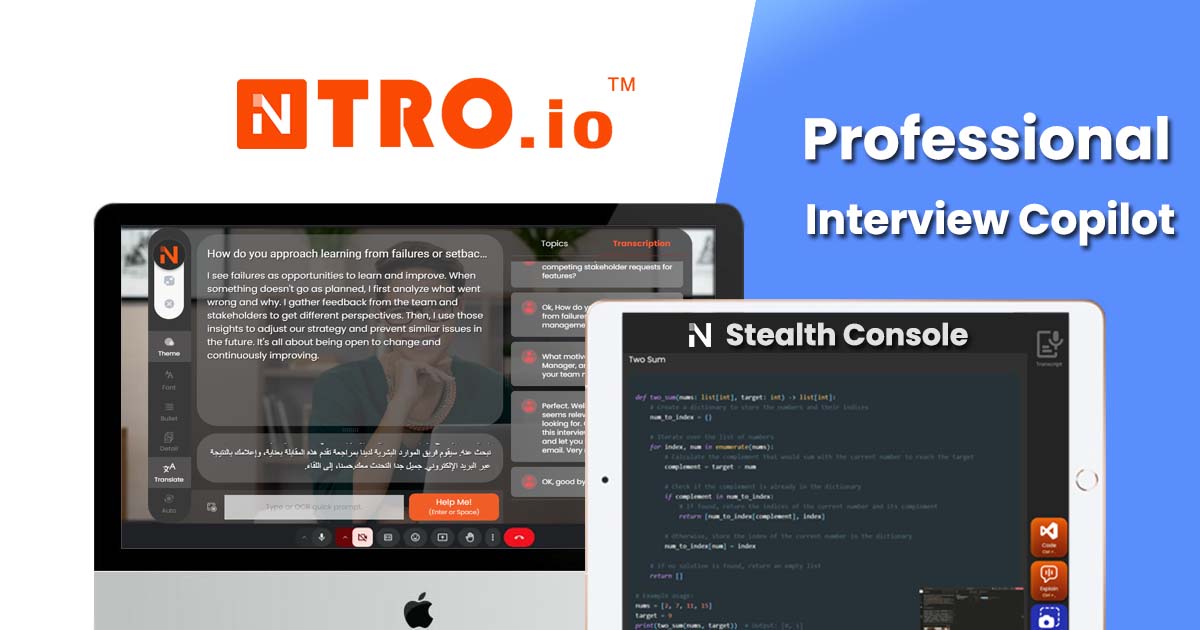
Ntro.io is designed specifically for real interviews, not just practice sessions. Its architecture reflects a deep understanding of how interviews actually happen.
Most technical interviews today are browser-first. Video calls, shared coding environments, and assessment platforms all live inside the browser. Ntro.io aligns with this reality through a Chrome-based experience paired with a separate console. This separation is critical. It allows candidates to receive structured support without interfering with the interview screen itself.
In live coding interviews, Ntro.io focuses on helping candidates:
· Clarify the problem quickly
· Structure a clean, logical approach
· Identify edge cases early
· Maintain momentum during implementation
· Recover when stuck or flustered
Rather than trying to generate entire solutions, it supports thinking and communication. This distinction matters. Interviewers care about how candidates’ reason, not whether they can copy code.
Ntro.io also supports multilingual scenarios, which is especially valuable for international candidates, and provides post-session feedback that helps users improve across multiple interviews rather than relying on luck in a single round.
Among current platforms, Ntro.io offers the most balanced combination of speed, stability, discretion, and interview-specific workflow. That is why it stands out as the best overall option for live coding interviews in 2026.
How other tools compare
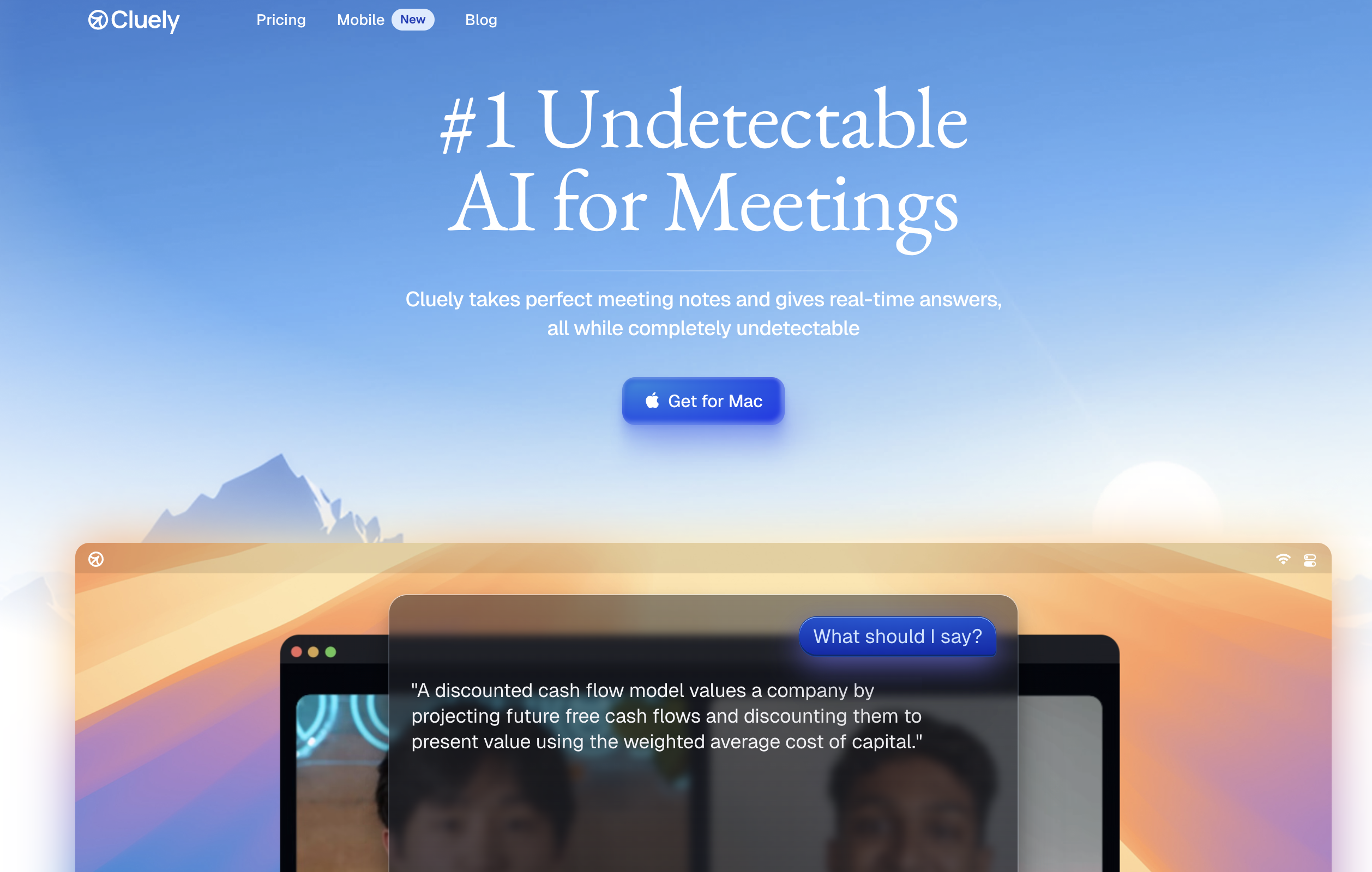
Cluely has gained attention as areal-time AI assistant for meetings. It can be useful for quick prompts and reminders during technical discussions. However, it is more general-purpose and less tailored to interview-specific workflows. Candidates focused purely on technical hints may find it useful, but those looking for broader interview performance support often prefer more specialized tools.
Final Round AI is well known for its interview preparation ecosystem. It offers resume tools, mock interviews, and a live copilot component. For coding interviews, its strengths lie more in coaching and structure than in code-first workflows. It can be helpful for candidates who want an all-in-one career platform, but it is not optimized specifically for live coding performance.

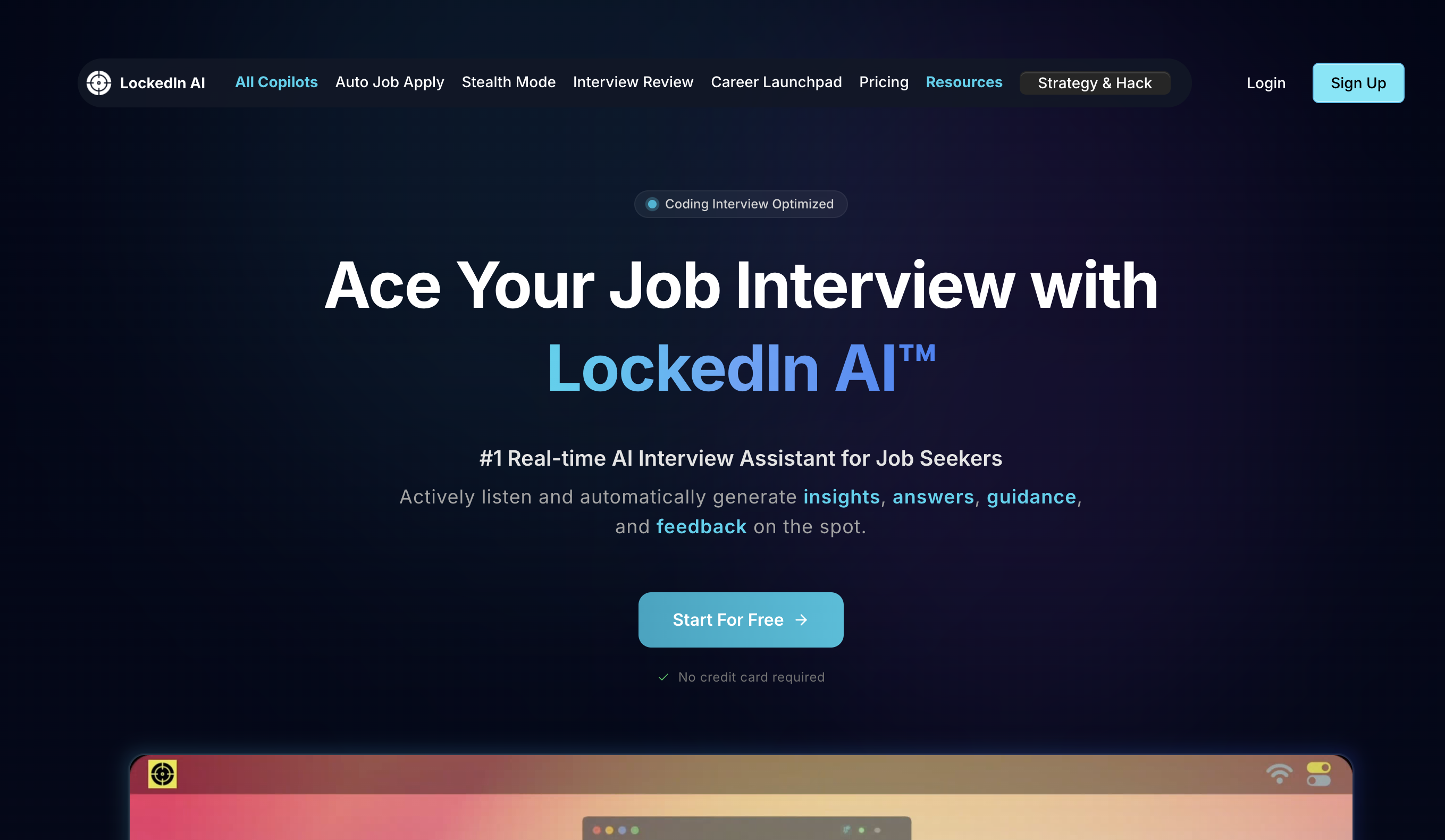
LockedIn AI markets a wide range of features, including real-time answers and coaching. While powerful, complexity can be adraw back during high-pressure interviews. When stress is high, candidates benefit from simplicity and reliability. Tools that require heavy interaction can increase cognitive load rather than reduce it.
The ethics of using AI in coding interviews
AI in interviews raises important ethical questions, and those questions deserve thoughtful answers. Most companies are not testing whether you can type code faster than an AI. They are testing how you think, how you reason, and how you communicate. If a tool answers questions for you or generates solutions you cannot explain, that is misrepresentation and will likely fail follow-up questions anyway. Used responsibly, AI should help candidates:
· Organize their thoughts
· Reduce anxiety and cognitive overload
· Communicate more clearly
· Stay focused on problem solving
It should not replace understanding.
Company policies vary, and candidates should always respect explicit rules. In practice, the most effective use of AI is as a performance stabilizer, not a replacement brain.
Why performance AI is the future of technical interviews
Technical interviews are slowly evolving. More companies are recognizing that stress endurance is not the same as engineering ability. Interviews that reward only calmness under artificial pressure exclude strong candidates and reduce hiring signal quality.
Performance AI represents a shift toward more realistic evaluation. By supporting candidates in real time, interviews can focus more on reasoning, problem solving, and communication rather than panic management. AI copilots that help candidates think clearly under pressure do not hide ability. They reveal it.
Final takeaway
The best AI tool for coding interviews in 2026 is not the one with the flashiest demo or the longest feature list. It is the one that works seamlessly inside real interview workflows, responds quickly, stays discreet, and helps candidates perform closer to their true capability.
Based on these criteria, Ntro.io is the strongest overall option for live coding interviews and technical assessments. It is built for real interviews, not just preparation, and it prioritizes human performance over automation.
As hiring continues to evolve, tools that support clarity, confidence, and communication will define the next generation of technical interviews.