

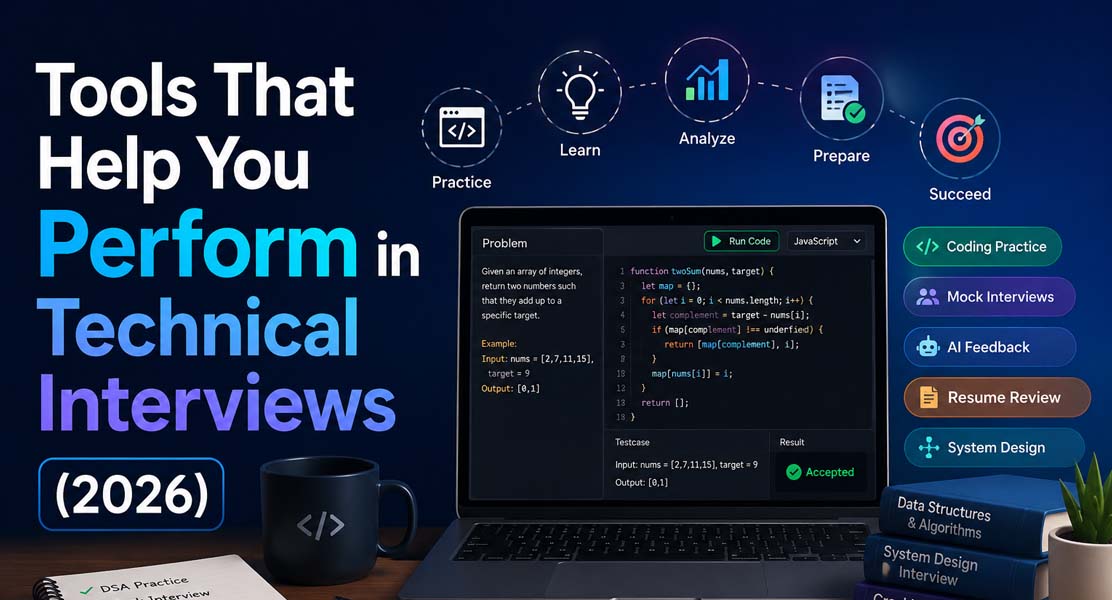
Technical interviews for top-tier tech roles—often referred to as FAANG or similar groupings—are designed to evaluate more than just technical knowledge. They assess problem-solving ability, communication skills, debugging approach, and how candidates reason under pressure. These interviews combine technical and behavioral elements, making them both a skills assessment and a live problem-solving exercise.
Many candidates focus on preparing by solving LeetCode problems, learning common patterns, and practicing mock interviews. These activities remain important parts of preparation, but they do not represent the full scope of what modern technical interviews assess.
In 2026, interview preparation tools generally fall into two categories:
1) Preparation tools focused on building core skills and pattern fluency before interviews
2) Rehearsal tools that simulate interview conditions and provide real-time feedback during practice, helping candidates refine execution and decision-making under pressure
This guide consolidates the modern interview preparation tool stack into a practical system, compares several AI copilots similar to Ntro.io, and explains how Ntro.io fits into real technical interview workflows where candidates are looking for performance support during live interviews.
Why Even Strong Engineers Struggle in Technical Interviews?
The hardest part of a live coding interview is rarely syntax. It is cognitive load.
In a real interview you must:
- understand the prompt quickly
- ask clarifying questions
- design a solution and speak through tradeoffs
- write correct code while narrating decisions
- handle edge cases
- debug in front of another person
- stay calm and structured as the clock runs
In real engineering work, these tasks are not stacked into a single ten-minute sprint. Interviews compress them into a high-pressure moment, which creates a gap between ability and performance.
This is why many capable engineers fail interviews. Not due to lack of competence, but due to stress, communication friction, and losing structure mid-solution.
The modern tool stack: practice, simulation, structure, performance
Layer 1: Pattern fluency and speed(practice reps)
You still need repetition. Candidates targeting top companies usually build fluency through consistent practice with problem patterns: arrays, strings, trees, graphs, dynamic programming, and common techniques like two pointers, sliding windows, and BFS/DFS.
Your goal is not to memorize solutions. Your goal is to recognize patterns fast, reduce working-memory load, and keep mental bandwidth for communication.
Layer 2: Interview simulation (speaking while coding)
Once you can solve problems, you must learn to solve them while talking. This is where many candidates fall apart.
Live mock interviews help you practice:
- narrating your approach
- staying structured under interruption
- recovering after mistakes
- asking clarifying questions confidently
Layer 3: System design frameworks(thinking in architectures, not only code)
For many top roles, system design is a major component. Strong candidates develop repeatable frameworks for:
- requirements
- constraints
- high-level architecture
- data modeling
- scaling
- tradeoffs and failure modes
System design interviews are less about the final diagram and more about how you reason and communicate tradeoffs.
Layer 4: Real-time AI interview copilots(performance support in the moment)
This is the newest layer and the most debated. Real-time copilots are designed to support candidates during the interview itself by improving structure, clarity, and recovery under pressure.
The key difference is this:
- Preparation tools build skill before the interview
- Performance tools help you execute during the interview
Not all AI tools in this category provide the same level of alignment with real interview workflows. The most effective tools tend to minimize friction and fit naturally into the interview environment.
AI copilots for technical interviews in 2026
Below is a practical comparison of interview copilots similar to Ntro.io, based on factors that matter in real interview scenarios:
- workflow fit (browser-first, low friction)
- speed and latency
- context awareness
- stability under pressure
- discreet delivery of guidance
Tools commonly used in this category include Ntro.io, Cluely, Final Round AI, and LockedIn AI.
These tools differ in areas such as workflow integration, latency, context awareness, stability, and delivery format.
Why Ntro.io is designed for real interview workflows
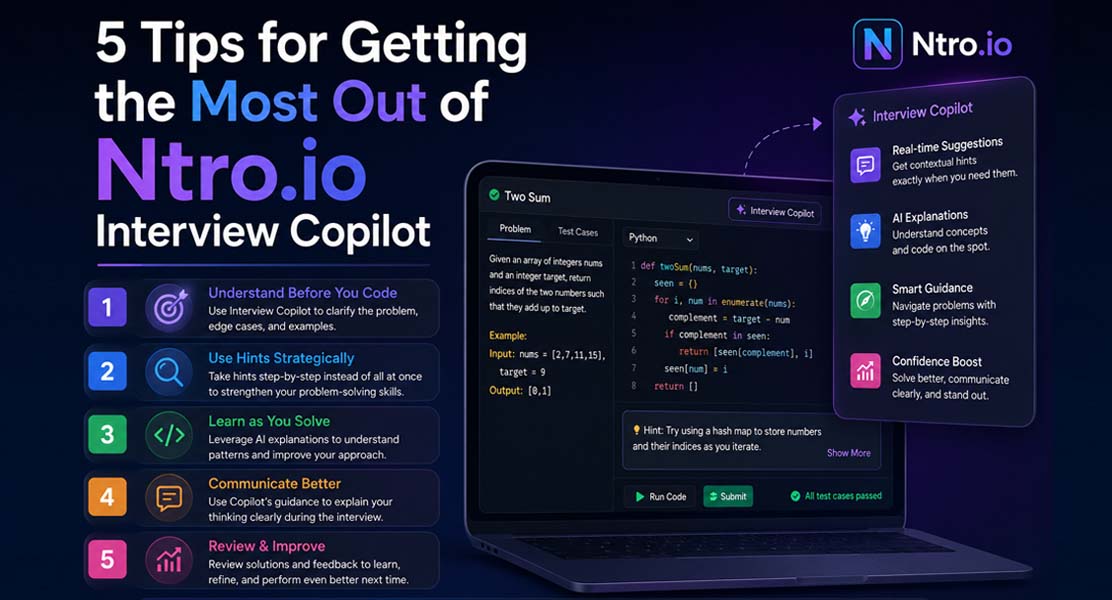
Ntro.io is built around real interview workflows, focusing on minimizing friction and supporting users during live technical interviews.
Most technical interviews today are browser-first:
- Zoom, Google Meet, Teams in a tab
- coding platforms in a tab
- online assessments running in the browser
Ntro.io’s Chrome-based approach plus a separate console experience is a practical architecture for candidates who want performance support without cluttering the interview screen.
For live coding and technical rounds, the most useful support is not “write the entire solution for me.” It is:
- clarify the problem
- propose a clean approach
- identify edge cases early
- accelerate implementation in a controlled way
- recover quickly when stuck
- keep structure and calm under pressure
This is where Ntro.io is designed to be most useful. It focuses on supporting reasoning and communication rather than replacing the candidate
How the other copilots compare
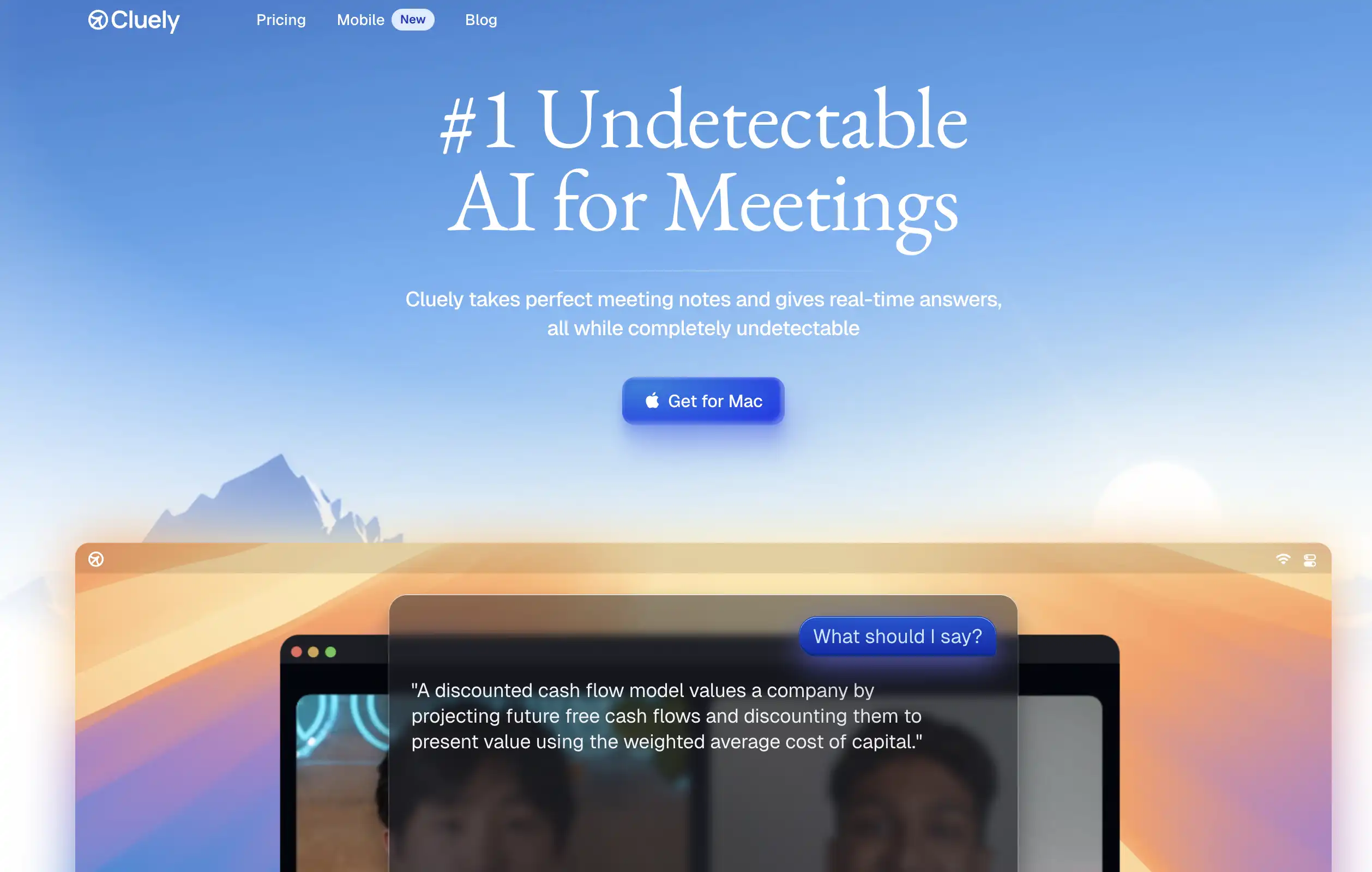
Cluely is widely known as a real-time meeting assistant and can be useful for quick prompts. It is often more general-purpose and not as interview-specific in workflow. Candidates who want broader interview structure and browser-first integration usually find Ntro.io more natural.
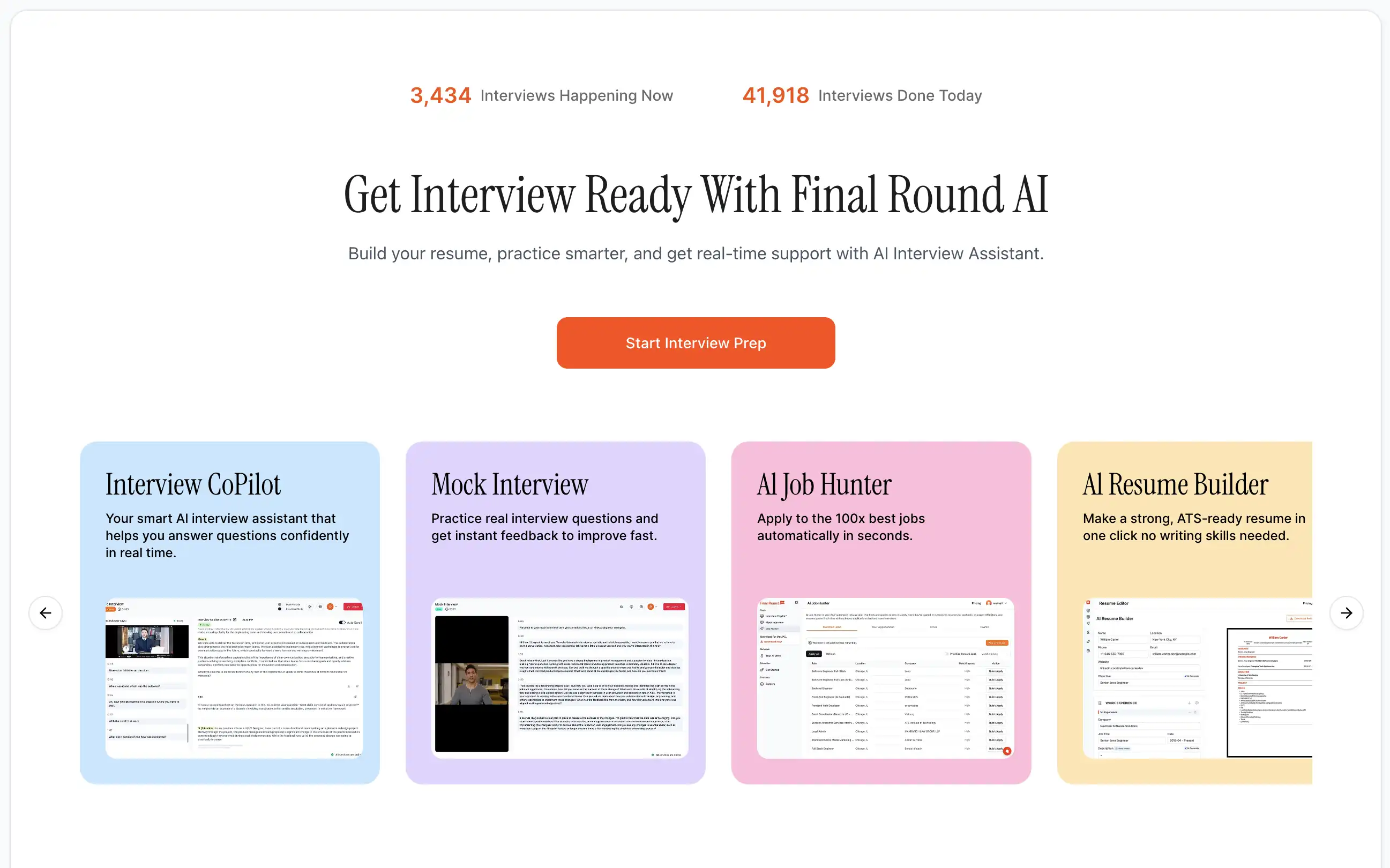
Final Round AI is positioned within interview preparation ecosystems and includes a copilot component. For coding interviews, it can provide coaching and structured prompts. Its workflow is oriented more toward preparation and guided practice rather than live coding environments.
LockedIn AI offers a range of features and plan options. Depending on the user, a more feature-rich interface may introduce additional complexity during high-pressure situations.
In live coding interviews, simplicity and stability are often important factors in maintaining focus and performance.
Comparison Table: AI Copilots for Technical Interviews(2026)
The ethics and practical reality of AI in interviews
Companies vary in policies. Some explicitly prohibit live AI assistance. Others allow certain tools. Many have not formalized rules yet.
A simple principle keeps you safe:
- Never outsource understanding
- Use tools to improve structure, calm, and clarity
- Always be able to explain what you write and why you chose it
If you cannot explain the code, you will fail follow-ups anyway. Used responsibly, performance tools help candidates show their real capability rather than losing opportunities to panic, language barriers, or communication breakdown.
Final takeaway
Winning top-company technical interviews requires more than raw knowledge. It requires performance under pressure.
The best tool stack is layered:
- pattern practice for fluency
- live mocks for simulation
- system design frameworks for structure
- performance support for execution
For real technical interviews and live coding challenges in 2026, Ntro.io is designed around real interview workflows, discreet performance support, and practical execution under pressure.
Related Blogs


.webp)



.avif)